Quick facts: Washington requirements
- Agency
- Washington State Department of Labor & Industries (L&I)
- Registration
- General or specialty contractor registration
- Required bond
- $30,000 general or $15,000 specialty (continuous surety bond)
- Also required
- Separate L&I electrical contractor license
Fees, bond amounts, and rules change. Verify every item with the responsible agency before you rely on it.
This one question trips up more aspiring contractors than almost anything else in the entire registration process: are you a general contractor or a specialty contractor? It sounds like a small classification detail. It is not. It determines your bond amount, what work you can legally advertise and bid, and whether your registration goes through cleanly or gets kicked back for a mismatch. Get this wrong and you may find yourself unable to take a job you assumed you were covered for, or paying for a bond sized for the wrong category entirely.
Here is how Washington actually draws this line, and how to figure out which side of it you are on.
Not sure which category fits your work? Build your free Contractor Lane roadmap and get it confirmed before you file anything.
What a general contractor actually is
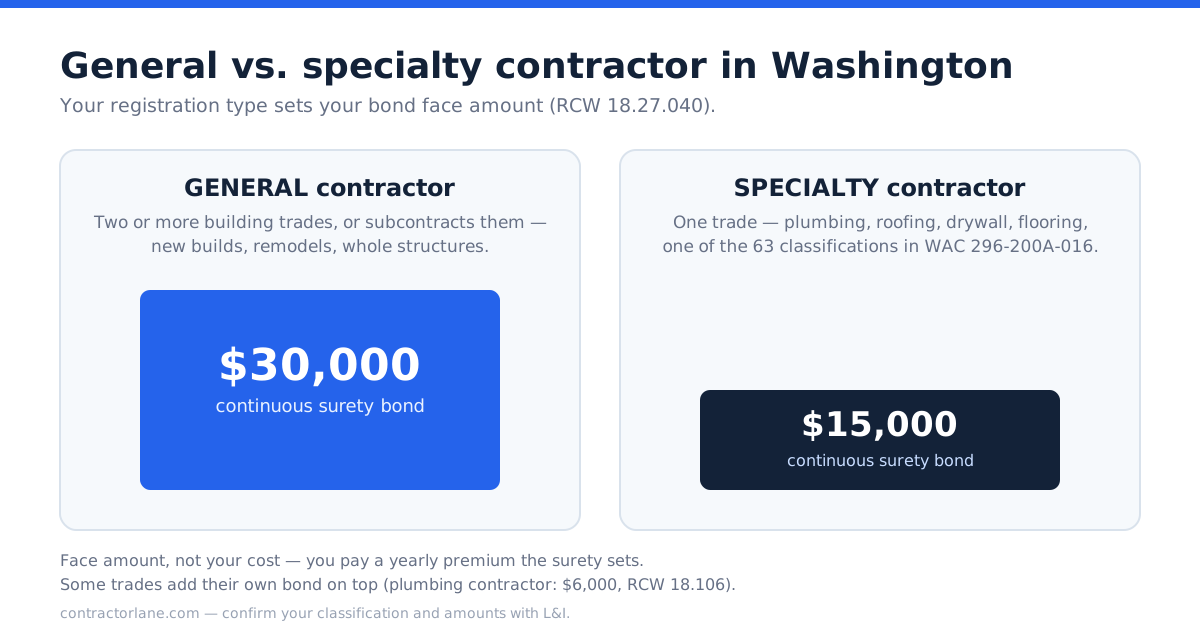
A general contractor in Washington is registered to take on projects that involve multiple trades under one job. Think a full kitchen remodel that touches framing, electrical rough-in, plumbing, drywall, and finish carpentry, all coordinated under one contract. General contractors often oversee or hire subcontractors to handle the pieces outside their own hands-on skill set, while carrying overall responsibility for the project.
Because a general contractor's work spans a wider scope and touches more of a structure, Washington requires a larger bond: a continuous $30,000 surety bond.
What a specialty contractor actually is
A specialty contractor is registered to work within a single defined trade category. Washington recognizes 63 separate specialty contractor categories, covering everything from painting and flooring to landscaping, drywall, concrete, roofing, and dozens more. If your work is contained to one of these categories and you are not coordinating a multi-trade project under your own contract, specialty is very likely the correct registration for you.
Because the scope of a specialty contractor's work is narrower, the required bond is smaller too: $15,000 instead of $30,000.
Where people get confused
The line seems clean in theory and gets blurry in practice. A painter who occasionally coordinates a subcontractor for drywall repair before painting might wonder if that pushes them into general contractor territory. A handyman who takes on small multi-trade jobs, a little plumbing here, a little electrical there, might genuinely span categories without realizing it. A specialty contractor who lands a bigger remodel job that technically requires oversight of other trades might be operating outside what their specialty registration actually covers.
This is exactly the gray area where guessing gets expensive. Registering as a specialty contractor when your actual work spans general contracting territory can leave you bidding or performing work outside your registered scope, which creates real exposure. Registering as a general contractor when specialty would have covered you means paying for a larger bond and likely a higher premium than your work required.
A few trades carry their own extra layer
It is also worth knowing that not every specialty category works the same way. Electrical work requires an L&I electrical contractor license on top of contractor registration, along with certified electricians doing the work. Plumbing work requires certified plumbers. Most other specialty trades mainly need the standard contractor registration without a separate trade exam layered on top. Knowing which bucket your trade falls into, before you assume the general specialty path applies to you, saves a real headache later.
How to actually decide
The honest answer is that deciding correctly depends on the specifics of your trade, how you plan to structure your jobs, and whether you intend to ever take on multi-trade projects under your own contract versus staying within one lane. This is not a decision to make from a quick guess based on what sounds close enough. The category you choose determines your bond size, your premium, your registration paperwork, and what work you are legally permitted to bid once you are registered.
Why most people stall out here
People hit this fork in the road and one of two things happens. Either they freeze, unsure which box to check, and the whole registration process stalls while they try to piece together an answer from scattered forum posts and old blog comments. Or they guess, pick whichever sounds more familiar, register under the wrong category, and only find out it was wrong when they either cannot legally take a job they wanted, or L&I flags a mismatch with their bond and sends the application back.
Both outcomes cost real time. Neither one needed to happen if the right question had been asked, and answered correctly, at the very start.
Do not guess between general and specialty. Check in with Contractor Lane and get your category confirmed against your actual planned work before you buy a bond.
Where Contractor Lane comes in
This is exactly the kind of decision where a beginner needs someone asking the right questions about their actual work, not a generic definition copied from a glossary. Contractor Lane is the front door for starting a contracting business in Washington, and we exist to catch you at this exact fork, before you buy the wrong bond and before an accounting app or a lead-selling service ever shows up trying to sell you something you have not even qualified for yet.
We help you map your actual planned work against Washington's general and specialty categories, flag whether your trade carries an extra licensing layer like electrical or plumbing, and confirm the correct bond size before you spend a dollar on a premium. Once your category is locked in, we carry you straight through bonding, insurance, and your L&I registration, and hand you the free roadmap builder to keep the next setup steps in order once you are cleared to work. If you want hands-on help getting every piece right the first time, the paid roadmap is built for exactly that.
Ready to launch?
General versus specialty is not a coin flip. It is a decision with real consequences for your bond, your paperwork, and what work you can legally take. Build your free Contractor Lane roadmap and get your category confirmed before you register a single form.
General educational information for people starting a business in Washington. Requirements and fees change. Contractor Lane is not a law firm or tax advisor.
Get covered
Need general liability insurance to register?
Washington won't approve your contractor registration without proof of liability coverage. Hiscox writes small-business and trade policies you can quote and buy online in a few minutes.
Get a free insurance quote → Affiliate link: if you buy a policy through Hiscox, Contractor Lane may earn a commission at no additional cost to you. We only point to coverage a contractor actually needs. Always compare quotes and confirm the policy meets Washington's minimums before you buy.